


By Rens Kleijmeer, Commercial Director at Windmill Forwarding with over 10 years of experience in the international moving industry · 12 June 2026
For anyone who has never done it before, an overseas move is nearly impossible to manage on your own — at least not smoothly and efficiently. It involves far more than transporting your belongings. The real challenge is successfully importing your household goods into another country: extensive paperwork, local and international regulations, and dozens of specialists who all need to do the right thing at the right moment. In this article we explain why it’s so complex — and how to arrange it without worry.
More than transport alone
An international move consists of a series of steps, each requiring specialist knowledge of both the country of origin and the destination. Think of careful planning, customs formalities and knowledge of local requirements. Compare it to building a house: different disciplines need to align seamlessly, and one missing link brings the whole process to a standstill.
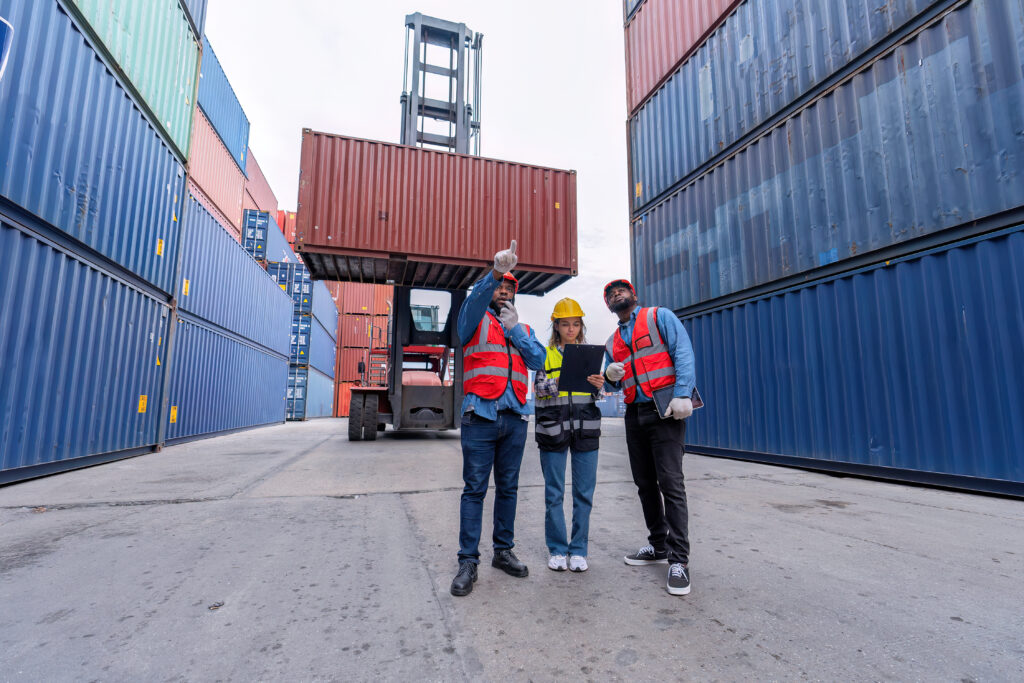
The 16 steps of an overseas move
An overseas move involves sixteen links in the chain, spread over four phases. At every link, a different specialist steps in:
Phase 1 — Packing and departure from the Netherlands
- The moving team in the Netherlands (or elsewhere in Europe) professionally packs your household goods, with special care for fragile and valuable items
- Transport from your home to the warehouse by a specialised Dutch carrier
- Warehouse handling and storage: your shipment is inspected, labelled and prepared for export — temporary storage is possible
- Transport from the warehouse to the port, where the container is professionally loaded
- The customs forwarder handles export clearance and all export documentation
Phase 2 — The great crossing
- Terminal staff at the Dutch port load the container onto the vessel and check the seal
- The shipping line ensures a safe ocean crossing and monitors the container location and sailing schedules
Phase 3 — Arrival in the destination country
- Terminal staff at the destination port unload the container and prepare it for import clearance
- Customs experts handle import clearance: duties, taxes, container release and compliance with local import regulations
Phase 4 — Delivery to your new home
- Transport from the port to the destination warehouse
- Warehouse handling at destination, with temporary storage if your new home isn’t available yet
- Transport from the warehouse to your new home by a local carrier who knows the region
- The moving team at destination unloads, checks for damage and places furniture in the correct rooms
- A handyman assembles furniture and installs lighting and appliances (on request)
- Insurance experts guide you through any claims procedure
- Your personal Move Coordinator oversees the entire process, keeps you informed and remains your single point of contact
Each transfer point adds complexity. By managing these links internally and through established partners, we prevent fragmentation and miscommunication.
What can go wrong along the way?
Even with the most experienced partners, unforeseen situations can arise. An overseas move doesn’t just depend on human planning, but also on external factors: weather conditions, customs procedures, port congestion and logistical delays. No one controls those completely. The difference lies in the response: a good moving partner spots problems early, liaises directly with the parties on the ground and keeps you proactively informed.
The value of a FIDI-certified partner
As a FIDI-certified company, we uphold the highest industry standards at every stage of the relocation. Our destination partners are carefully selected for expertise and reliability and — like us — are audited periodically. Moving with a FIDI-certified company like Windmill Forwarding ensures a smooth transition and essential support if something unexpectedly goes wrong. You can count on us.
How much does an overseas move cost?
To give you an idea based on our internal figures: a groupage shipment (your goods share a container) costs around € 5,000 on average, a dedicated 20ft container around € 10,000 and a full 40ft container around € 15,000. These are average quoted prices, depending on destination and volume — indicative and not binding. You’ll find a complete overview with prices per country on our page about the costs of an international move.
Frequently asked questions about moving overseas
Can I arrange an overseas move myself?
In theory, yes — in practice it’s strongly discouraged. You’ll be dealing with export documentation, customs clearance in the destination country and local rules that differ per country. One mistake in the paperwork can cause weeks of delay and high additional costs.
How long does an overseas move take?
That depends on the destination and whether you choose a dedicated container or groupage. Roughly count on six to twelve weeks door to door. To popular destinations such as the United States, South Africa and Thailand, our groupage containers depart twice a month.
What exactly does a moving partner do for me?
Everything in the sixteen steps above: from packing to shipping, customs handling and delivery to your new home. You keep one point of contact — your personal Move Coordinator — coordinating the entire process. For more information, advice or a quote, feel free to contact us.